
Why Restaurants Are Replacing Static Menus With Digital Displays
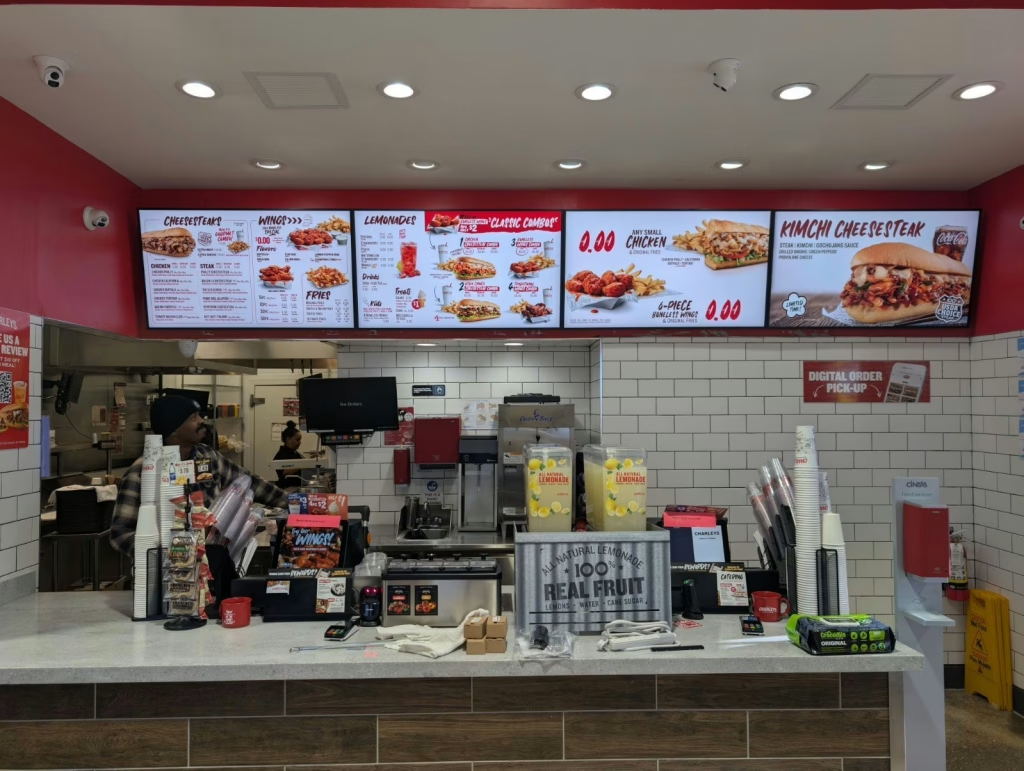
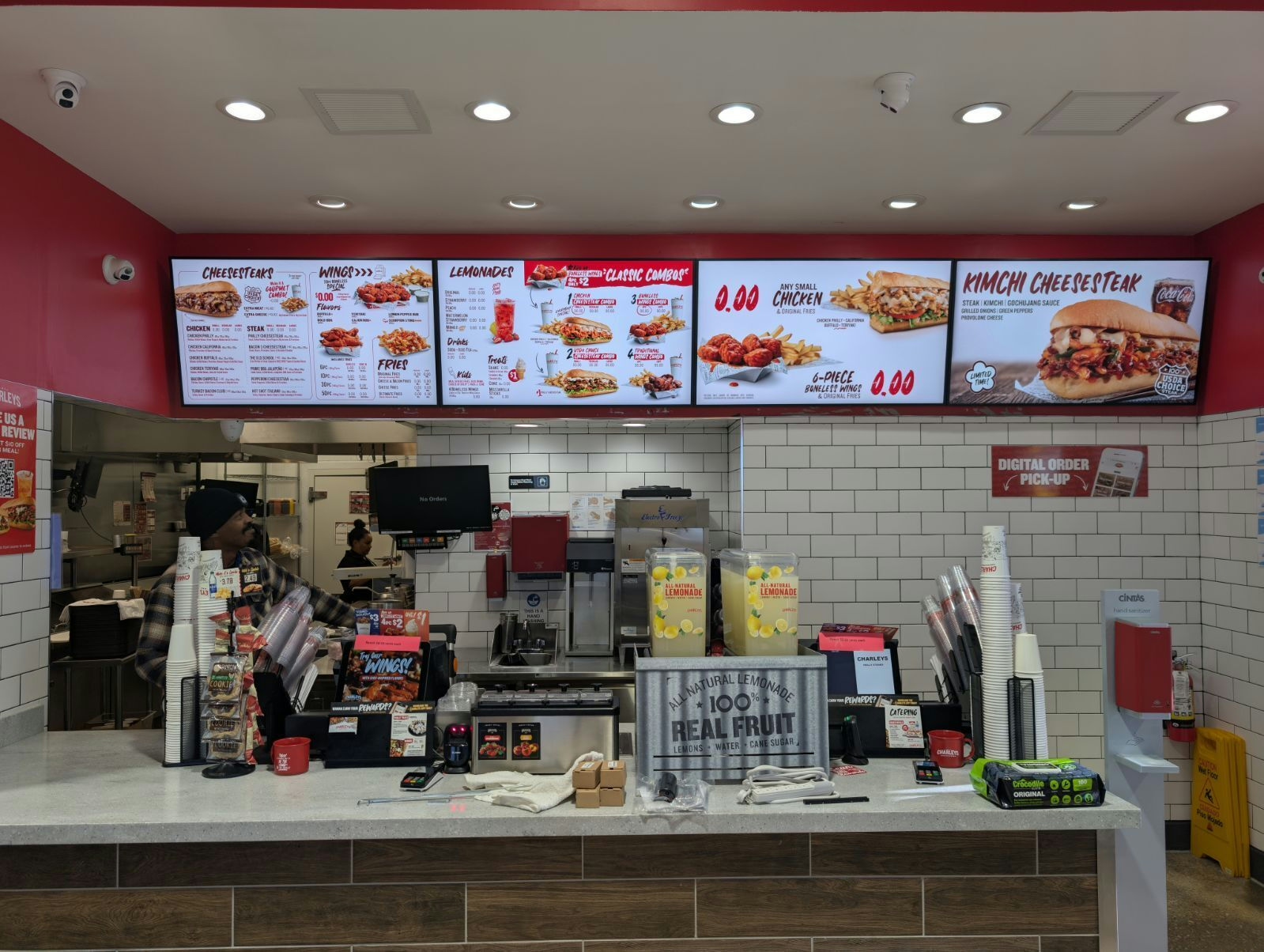
The shift from printed menus to digital screens is no longer a trend reserved for national chains. Independent restaurants, airport concessions, university dining halls, and quick-service operators are all making the transition — and the reasons go far beyond visual appeal. Digital menu boards give food service businesses the ability to control pricing, promotions, and product availability from a single dashboard, eliminating the delays and costs associated with reprinting physical signage every time something changes. For operators managing tight margins, that operational agility translates directly into higher revenue and lower overhead.
The Real Financial Case for Digital Menu Boards
Many operators hesitate at the upfront hardware cost without considering the compounding savings that follow. Recurring expenses for printed posters, foam-core boards, and vinyl banners disappear entirely. More importantly, digital displays let you spotlight high-margin items and limited-time offers with precision timing — a strategy that consistently lifts average check size. Research across the food service industry shows that well-designed digital menus can increase sales of promoted items by 15 to 30 percent. When you factor in the elimination of print cycles and the revenue gains from smarter merchandising, most systems reach a positive return within the first year of deployment.
What a Modern Digital Menu Board System Looks Like
A complete setup involves three core components: commercial-grade screens built for continuous operation, a compact media player to drive content to each display, and a cloud-based content management system that ties everything together. The CMS is the operational backbone. It determines how easily your team can schedule dayparted menus, push emergency price changes, or synchronize branding across dozens of locations at once. Menuboard Manager, the platform developed by OSM Solutions, was built specifically for this use case — providing real-time scheduling, point-of-sale integration, and centralized control without requiring technical expertise on-site.
POS integration deserves special attention. When your digital boards communicate directly with your point-of-sale system, sold-out items are removed automatically and price updates propagate instantly. That accuracy protects the customer experience and prevents staff from fielding complaints about items that are no longer available.
Designing Content That Actually Drives Orders
Hardware and software only deliver results when paired with effective content. The most productive digital menus follow a few consistent principles: clean layouts that let customers scan options in seconds, high-resolution photography that makes food look as good as it tastes, and strategic use of motion to draw attention to featured promotions without creating visual clutter. Dayparting — automatically rotating breakfast, lunch, and dinner content based on time of day — keeps every screen relevant to the customers standing in front of it. If your team lacks in-house design capacity, OSM Solutions offers professional content services to ensure your displays perform from the moment they go live. You can explore recent project highlights and industry insights on the OSM Solutions blog.
Start Building a Smarter Menu Experience
Whether you operate a single storefront or manage signage across a multi-state portfolio, Menuboard Manager gives you the tools to control every screen from one intuitive platform. OSM Solutions has spent years refining its technology for the specific demands of food service environments — from drive-thru lanes to airport terminals. If you are ready to evaluate what digital menu boards can do for your operation, contact us to schedule a demo and see the platform in action.
