
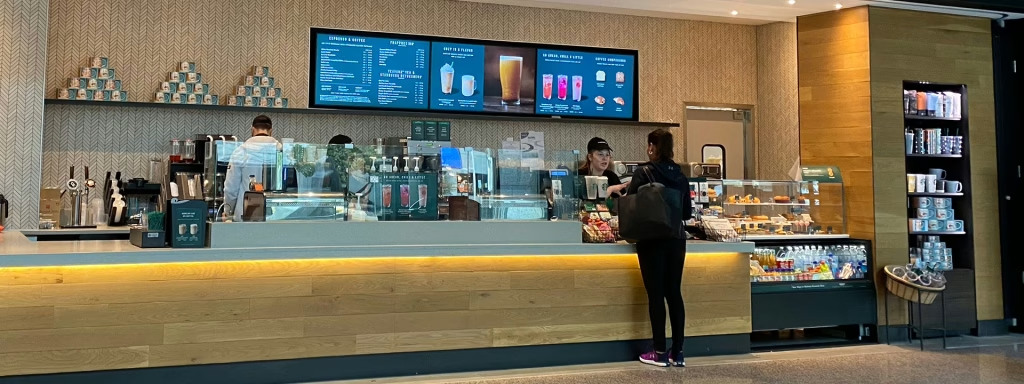
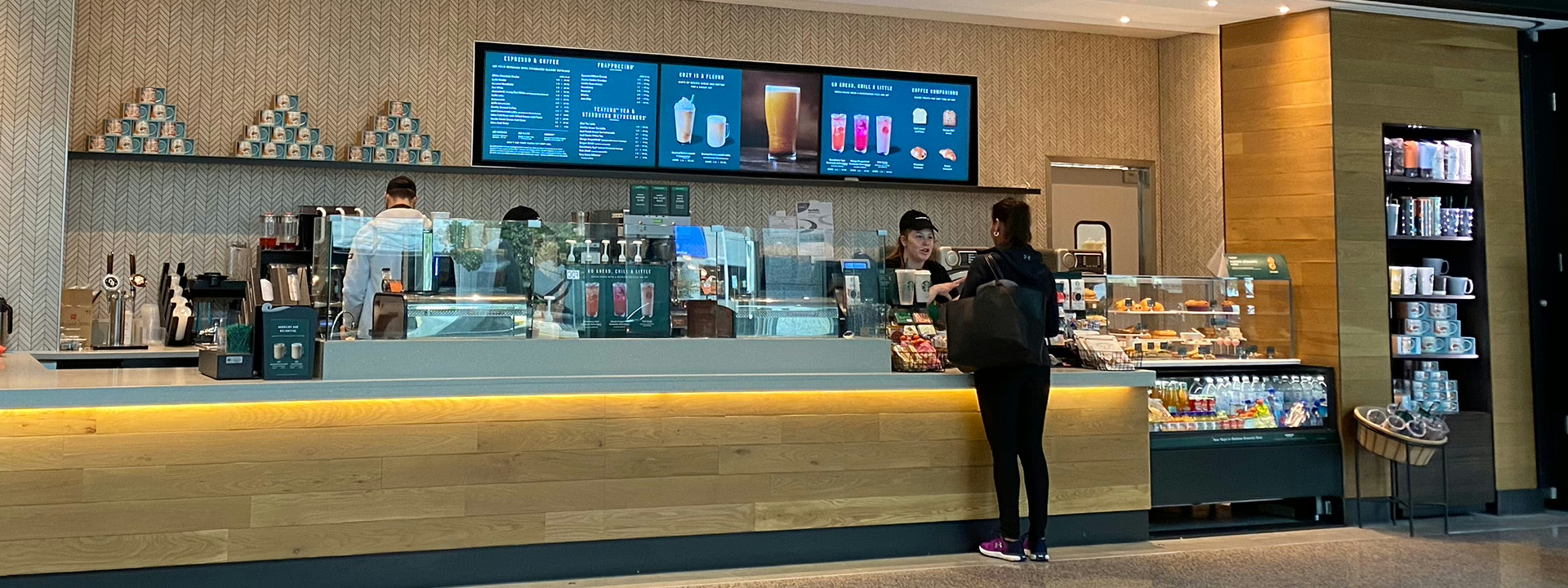
Why Quick Service Restaurants Are Betting Big on Digital Menu Boards
Speed, accuracy, and margin optimization define success in the quick service restaurant industry. As consumer habits shift toward digital-first experiences, static printed menus have become a liability rather than an asset. Digital menu boards now serve as the operational backbone for QSRs that need to update pricing instantly, promote high-margin items strategically, and deliver a seamless ordering experience across every daypart. The restaurants adopting this technology are not just keeping up — they are pulling ahead of competitors still relying on outdated signage workflows.
Real-Time Control That Printed Menus Cannot Deliver
The core advantage of digital menu boards lies in centralized, real-time control. When a menu item sells out, a limited-time offer launches, or ingredient costs fluctuate, operators need the ability to respond immediately across every location. A cloud-based platform like Menuboard Manager gives restaurant operators that capability from a single dashboard, eliminating the delays and costs associated with reprinting physical signage. Menus stay accurate, pricing stays current, and the customer experience remains consistent whether a brand operates five locations or five hundred.
This level of agility also supports dayparting strategies, where breakfast, lunch, and dinner menus transition automatically based on scheduled time windows. Staff no longer need to swap out panels or remember to update boards manually, reducing human error and freeing team members to focus on service.
Turning Every Screen Into a Revenue Driver
Digital menu boards do more than display items — they influence purchasing decisions at the exact moment a customer is ready to order. Strategic layout design, high-quality food imagery, and data-informed content placement encourage customers to add sides, upgrade sizes, or try featured items. Industry data consistently shows that well-designed digital menus increase average ticket size, with some brands reporting double-digit sales lifts after implementation.
OSM Solutions builds these revenue-driving principles directly into the Menuboard Manager platform, giving operators the tools to design content that guides the customer eye toward high-margin categories without overwhelming the ordering experience. The result is a menu that works harder for the business every hour it is on screen.
Operational Savings and Sustainability
Beyond revenue gains, digital menu boards eliminate recurring print production costs and reduce waste. For multi-location QSR brands running frequent promotions or seasonal rotations, the savings compound quickly. There are no shipping delays for new menu panels, no disposal of outdated materials, and no inconsistencies between locations waiting on different print batches. The environmental benefit is equally significant — less paper waste and fewer logistics emissions contribute to sustainability goals that matter to modern consumers and corporate stakeholders alike.
Building a Scalable Digital Menu Strategy
The QSR brands seeing the greatest return from digital signage are those that treat it as a strategic platform rather than a simple screen replacement. That means integrating menu boards with POS systems, scheduling content around traffic patterns, and continuously refining layouts based on performance data. OSM Solutions partners with restaurant operators at every stage of this process, from initial hardware planning through ongoing content management and optimization. For the latest insights on digital signage strategy, visit the OSM Solutions blog.
If your QSR is ready to move beyond static signage and start leveraging digital menu boards as a true business tool, contact us to schedule a demo and see how Menuboard Manager can work for your operation.
